

Marietta, GA
MAFFC 2026
Classroom Schedule
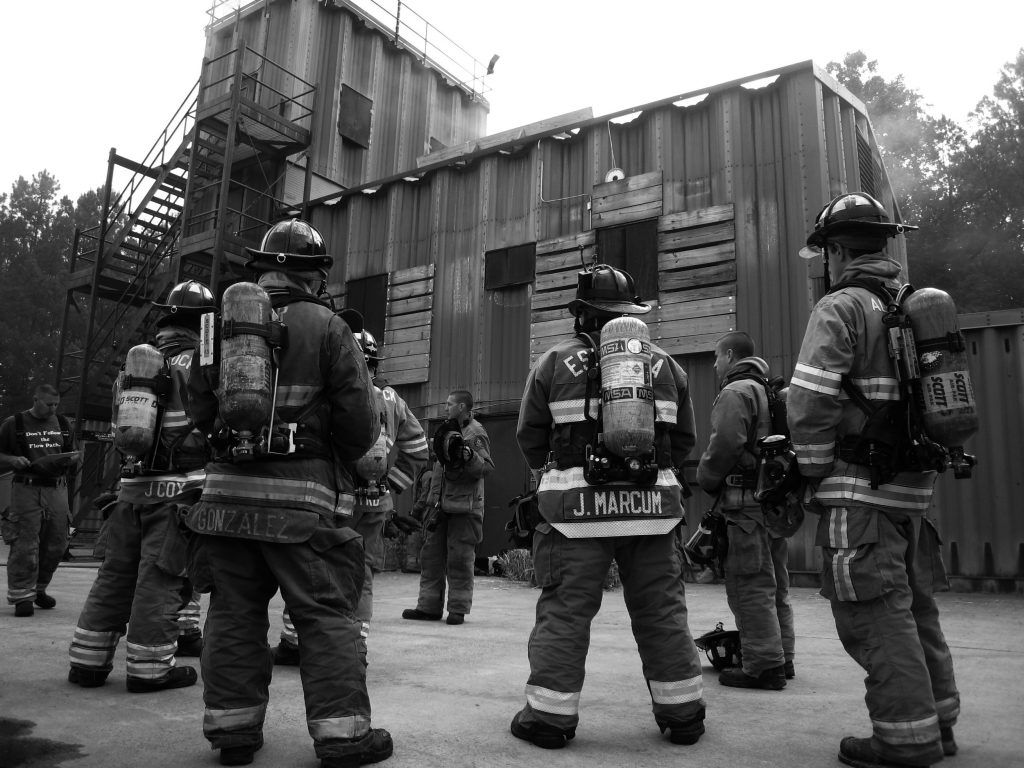
Classes will be located at Cobb Fire Training Grounds. Classes are still being finalized. Subject to change, please contact the MAFFC team with any questions.
Thursday May 14, 8am
Walking the Wire-Company Officer
8am
Sean Gray
Classroom D
Walking the Wire between the Firehouse Kitchen Table and Fire Headquarters for a Company Officer can be a delicate balancing act for anyone in the fire service. Becoming a Company Officer is an integral piece in many firefighters’ career paths. This course will discuss lessons learned from the Fireground to leadership and administrative tasks. A perspective of both successes and failures will be shared. This interactive video-based course will provide the student with insight on how to build a winning team and WIN on both the fireground and within your organization.
Sean has been a member of multiple technical panels involving fire safety research and is an appointed member of the UL FSRI Advisory Board. He has co-authored the book The Evolving Fireground (Fire Engineering) and speaks nationally on research-based tactics. Additionally, Sean is an NFPA committee member for Fundamentals of Fire Control Within a Structure Utilizing Fire Dynamics (NFPA 1700), Fire Hose (NFPA 1961-1965), Fire Service Occupational Safety and Health (NFPA 1500), and Fire Service Training (NFPA 1400).
Sean also teaches Hands on Live Fire Search & Fire Attack along with a classroom lecture titled Attack from the Burned Side at FDIC, where he talks about how the modern fireground is evolving more than ever before, and with the use of research to enhance our procedures, how we can utilize different tasks and tactics to extinguish fires from all angles and how to apply evidence-based tactics to achieve a safer, smarter, and more efficient fireground.
First Due With A Clue
8am
Tim O'Conner
Classroom 6000
Everyone wants to be First Due to every fire they are dispatched to. But what happens when you are successful at beating everyone there? Do you know what needs to be done? Can you accomplish it all? Nothing is worse than arriving first, only to be beat to the seat by the 2nd due because you were unsure of what needed to be done or how to do it. This course will discuss the necessary tasks of the Engine and the Truck when arriving first due. First Due Engine and Truck operations simply put will make or break the fireground. If operations are efficient and executed well, success is easy. If operations are executed poorly, failure will ensue. The public places their blind trust in us each and every day that we will respond quickly and solve their problem, whatever it may be. This class will build upon the belief that everyone must know every job. The Truck relies on the Engine and the Engine needs the Truck. This class will take that belief and hone it to focus on the basics of Engine work and Truck work. It will mold those basics into a fluent coordination of movements that happen on the fireground. These movements collectively allow us to rescue human life and preserve property, which after all is our primary mission. Engine topics include positioning for success, riding and tool assignments, hoseline selection and deployment for the greatest benefit among others. Truck topics will cover positioning around other apparatus, riding and tool assignments, the 2 team concept and how to consolidate positions when short staffed; we will also cover ladders, forcible entry, ventilation and search procedures.
Tim O’Connor is a Career Firefighter/EMT in a combination company in Delaware. He has been an active volunteer for 20 years and has held various positions during that time up to and including Deputy Chief. Tim is an Instructor at the Delaware State Fire School and teaches with Task Force 1, INC. Tim has written articles published in Firehouse and Fire Engineering Magazine and has taught at various conferences around the Country including FDIC, FH Expo, and many local conferences
Purpose Driven Mission Minded
8am
Blake Stinnett
Classroom Command Lab
It’s understood that our mission in this job are the citizens in the community that we serve. That term has been famously coined, “FOR THEM”. This is of utmost importance, but there’s another half that should weigh just as heavily, the mission to serve those we work beside. Through this lecture, we will dive into what that looks like and how we should change our mindset to reflect being mission minded towards the ones we work beside every shift.
I truly believe the way we make a greatest difference in those we work beside is to have a mission to serve them. Our purpose to serve should bleed over into every aspect of our life. We are willing to lay down our life for another human, if our ticket is punched. We train hours upon hours to hone and sharpen our skills to make sure we give the citizens, our crews, and ourselves the best chance at going home. We need to take that same mentality and put it towards our crews. We have an opportunity every shift to make sure they are ok, taken care of, and poured into. If we aren’t doing that, we need to change our mindset. We are great at honoring those who have gone before us, but we need to desperately fight for those who are still alive and with us. The plan isn’t fool proof and people aren’t always easy, but we should never give up and never stop serving our crews wholeheartedly. This is how we change lives forever.
Blake has been on the job 12 years and has a heart and mission to serve the people he works beside. Blake lives in Madison, Ga with his beautiful wife, Natalie, and their three precious children, Layleigh, Jack, and Henry. Above all, Blake loves the Lord and knows every opportunity he receives is from him and for him. He is also the Founder of Next Rung, a nonprofit that exists to address the mental health issues of firefighters and first responders. Blake’s hope and passion is to help people see they are valued, loved, and they have a purpose here on this earth. Through Next Rung he’s able to accomplish that goal and more. Blake serves as a cadre member with Bearers of The Oath. Blake is currently on medical leave from the job, due to an on-duty accident.
Efficient Equals Effective
8am
Dylan Briggs
Classroom A
This class will encompass strategies to build into a firefighter's personnel and crew training methodology in order to become more efficient in all aspects of the job. The practice of efficiency without the end goal of effectiveness can often lead down the road of laziness and complacency. However, if we have the end goal of being effective firefighters and fire crews for THEM, then we can achieve the desired outcome.
The class is broken down into four primary sections; Training, Operations, Apparatus, and Culture. This class is based on leadership and mindset in order to build a foundation for success.
During the course we will discuss improvement in turnout times, personnel gear layout, job specific tool selection, riding assignments, tailboard time, scene size up, forcible entry, apparatus design, and more. Portions of this class will address the career firefighter, the volunteer firefighter, and members of apparatus design committees.
DYLAN BRIGGS is a Captain with the Morrisville (NC) Fire/Rescue Department where he is currently assigned to Rescue Company 21. He is also a member of the Northwest Harnett Vol. Fire Department. Dylan is a lover of the fire service and prides himself on being a student of the craft. He is and NC Fire Instructor Level-3, SPRAT Instructor, serves as a Fire Academy Instructor, as well as national speaker at many fire conferences. Dylan is also the Owner and Operator of GSF Training & Equipment Solutions. In addition, Dylan has a passion for firefighter mental/physical wellness; since 2018 Dylan has been a member of the North Carolina Peer Support Team (NCPS) where he currently serves as the Central Regional Coordinator. Dylan is also an instructor for FRCE (First Responder Center for Excellence). In his time away from the firehouse Dylan enjoys spending time with his wife Carla and daughter Kensley.
Thursday May 14, 10am
The Three Cs of Command Presence
10am
Steve Lester
Classroom Auditorium
By definition, command presence is simply how leaders present themselves to the ones they are leading. This could be a coach on a sports team in a pivotal game, a general leading his troops into battle, or a warehouse supervisor preparing his team to take inventory. In the American Fire Service, it’s an incident commander communicating with on-scene resources to mitigate the incident hazards with a sense of competence, confidence and control—the three C’s of command presence. The IC sets the tone for the incident—whether it’s the strategic IC or the mobile IC. This presentation will dive-in to each of these 3 Cs and explain them in detail from both the first person and third person perspective.
Steve Lester serves as the Division Chief of Training for Cobb County Fire and Emergency Services near Atlanta, Georgia. He became a career firefighter in 1996 and worked his way through every rank to his current position. Steve has a Bachelor degree in Fire Administration and an Associate degree in Nursing. He has served his department as a paramedic, special operations medic, adjunct fire training instructor and Blue Card Instructor. Outside of public safety, Steve serves as a registered nurse and is a certified flight registered nurse. Steve has participated in multiple projects within his department including development of the “High-Rise Operations Manual” and the “Incident Management Manual.” Steve has been presenter at the Metro Atlanta Firefighters Conference for many years and presented at the Blue Card Hazard Zone Conferences in 2024 and 2025. He is a senior advisor for the 575 F.O.O.L.S. Steve is a lead instructor with Blue Card; he instructs both Train-the-Trainer courses and various Incident Command Workshops throughout the country.
First Due With A Clue
10am
Tim O'Conner
Classroom 6000
Everyone wants to be First Due to every fire they are dispatched to. But what happens when you are successful at beating everyone there? Do you know what needs to be done? Can you accomplish it all? Nothing is worse than arriving first, only to be beat to the seat by the 2nd due because you were unsure of what needed to be done or how to do it. This course will discuss the necessary tasks of the Engine and the Truck when arriving first due. First Due Engine and Truck operations simply put will make or break the fireground. If operations are efficient and executed well, success is easy. If operations are executed poorly, failure will ensue. The public places their blind trust in us each and every day that we will respond quickly and solve their problem, whatever it may be. This class will build upon the belief that everyone must know every job. The Truck relies on the Engine and the Engine needs the Truck. This class will take that belief and hone it to focus on the basics of Engine work and Truck work. It will mold those basics into a fluent coordination of movements that happen on the fireground. These movements collectively allow us to rescue human life and preserve property, which after all is our primary mission. Engine topics include positioning for success, riding and tool assignments, hoseline selection and deployment for the greatest benefit among others. Truck topics will cover positioning around other apparatus, riding and tool assignments, the 2 team concept and how to consolidate positions when short staffed; we will also cover ladders, forcible entry, ventilation and search procedures.
Tim O’Connor is a Career Firefighter/EMT in a combination company in Delaware. He has been an active volunteer for 20 years and has held various positions during that time up to and including Deputy Chief. Tim is an Instructor at the Delaware State Fire School and teaches with Task Force 1, INC. Tim has written articles published in Firehouse and Fire Engineering Magazine and has taught at various conferences around the Country including FDIC, FH Expo, and many local conferences
Thursday May 14, 1pm
Engine and Truck Operations By The Letter
1pm
Sean Gray, Josh Forster, Ian Martin, David Gentile
Classroom D
Fire ground decision making should be based on facts discovered through experience and validated by research. Our agency SOG’s must be tied to contemporary evidence-based findings. Through a combination of data from UL’s Fire Safety Research Institute (FSRI) experiments and vast experience of our instructors, several consistent themes have emerged that will improve firefighter effectiveness. The Tactical Considerations supporting Engine and Truck Company operations included within this class will challenge, or perhaps reinforce, your Strategies, Tactics and Tasks addressed within your SOG/SOP’s.
Sean has been a member of multiple technical panels involving fire safety research and is an appointed member of the UL FSRI Advisory Board. He has co-authored the book The Evolving Fireground (Fire Engineering) and speaks nationally on research-based tactics. Additionally, Sean is an NFPA committee member for Fundamentals of Fire Control Within a Structure Utilizing Fire Dynamics (NFPA 1700), Fire Hose (NFPA 1961-1965), Fire Service Occupational Safety and Health (NFPA 1500), and Fire Service Training (NFPA 1400).
Sean also teaches Hands on Live Fire Search & Fire Attack along with a classroom lecture titled Attack from the Burned Side at FDIC, where he talks about how the modern fireground is evolving more than ever before, and with the use of research to enhance our procedures, how we can utilize different tasks and tactics to extinguish fires from all angles and how to apply evidence-based tactics to achieve a safer, smarter, and more efficient fireground.
Facilitating Incident Critiques
1pm
Marquam R. Johnson
Classroom 1000
We must take every opportunity to learn from our experiences. Facilitating a critique in a positive manner can draw out behaviors to reinforce, and opportunities to improve our operations. This program will present a simple 4-step process that prevents the "blame game", encourages full participation by all involved individuals, and results in obtainable objectives for improvement.
Marquam Johnson is a 54-year veteran of the Connecticut Fire Service. Beginning as a volunteer in Collinsville, he rose through the ranks to become Chief in 1982. With a college degree in architecture, he worked briefly as a Fire Protection Engineer. He was hired as a firefighter in West Hartford in 1979. He retired from West Hartford in 1991 as a Captain to become the Fire Chief in Torrington, a position he held for 10 years. The next 21 years of his career were spent as the Daytime Driver for the Barkhamsted Fire District. This mix of career and volunteer service shaped his career as a Fire Service Instructor; he taught for both the Hartford County and Litchfield County fire schools, and spent 41 years as a CT Fire Academy Instructor. He was an Adjunct Faculty member at the National Fire Academy in the1990s. One of the highlights of his career was his induction into the CT Firefighter’s Hall of Fame, Class of 2019. He “retired” once again in 2022 and moved with his wife to Michigan. There he continues to pursue his passion for firefighting and instruction as a paid-on-call member of the Alpena Township Fire Department.
Acting Up; The Do's and Don'ts of Company Leadership for Firefighters
1pm
Tim O'Conner
Classroom 6000
Leadership can be both formal or informal, permanent or temporary. When it’s temporary, there are challenges that are presented that must be overcome to stay effective. Being a temporary company officer, or acting up, is stressful. There is a lot to comprehend and complete both in quarters and on the fireground. Being able to juggle all those responsibilities is a challenge. This course will touch on company leadership on the fireground and in the firehouse as well as present tips and tricks gained from experience to make the transition into an acting company officer role easier.
Tim O’Connor is a Career Firefighter/EMT in a combination company in Delaware. He has been an active volunteer for 20 years and has held various positions during that time up to and including Deputy Chief. Tim is an Instructor at the Delaware State Fire School and teaches with Task Force 1, INC. Tim has written articles published in Firehouse and Fire Engineering Magazine and has taught at various conferences around the Country including FDIC, FH Expo, and many local conferences
Thursday May 14, 3pm
Street Smart Fire Attack
3pm
Tim O'Conner
Classroom 6000
It has been said "The fire goes as the first line goes." Nothing could be more true, and nothing is more integral to fixing the problem than a successful fire attack. What is a successful fire attack? What makes it "go"? Where does it need to "go"? How should it "go"? What happens when it doesn't "go"? Can it be done with short staffing? The fire service has been afforded a tremendous luxury with the availability of scientific data that can be combined with past practice and the hand you have been dealt to create a successful fire attack. The course will pair available data from UL/NIST studies, textbooks, street experience and trial and error to break down the components of a successful fire attack and provide an
understanding of the "why" behind the "how". The course will also provide a flow chart/decision making process students can use to mold the concepts to their individual departments operational make up to successfully execute the required steps in performing the attack at an incident.
Tim O’Connor is a Career Firefighter/EMT in a combination company in Delaware. He has been an active volunteer for 20 years and has held various positions during that time up to and including Deputy Chief. Tim is an Instructor at the Delaware State Fire School and teaches with Task Force 1, INC. Tim has written articles published in Firehouse and Fire Engineering Magazine and has taught at various conferences around the Country including FDIC, FH Expo, and many local conferences
Developing the Mindset for the Suburban Chief Officer
3pm
Chris Kidder
Classroom D
Transitioning from Company Officer to Chief Officer requires a shift in mindset in order to be successful.
This transition is often overlooked as we rise through the ranks of the Fire Department. Learning how to
lead from a different seat, motivate, stay relevant, engaged, and tactically sound is a challenge for all
Chief Officers. This class discusses ways to Develop the Mindset that is essential for the Suburban Chief
Officer in today's fire service.
This is an experience-based class that is built on success and failures, geared toward aspiring or current
Suburban Chief Officers. Topics to be covered include setting expectations and accountability, prioritizing
the shift, and developing a tactical approach to commanding incidents.
I began my fire service career in 2002. My journey at South Walton Fire District (SWFD) in Santa Rosa Beach, FL, began in 2005 as a Firefighter/EMT. In 2012, I was promoted to Sergeant/Paramedic and then rose to the rank of Lieutenant/Paramedic in 2015 where I was assigned as the Company Officer of one of our Truck Companies. In 2019 I was promoted to the rank of District Chief (Shift Commander) where I am currently assigned to A-shift.
I am currently an active member of the SWFD Technical Rescue Team. I hold an Associate in Science degree in Emergency Medical Services and a Bachelor of Science in Fire Administration. I work at Northwest Florida State College as an adjunct fire instructor. I hold multiple certifications to include Pump Operator, Fire Officer I, Fire Officer II, Fire Officer III, Fire Officer IV, Instructor I, and Live Fire Instructor II.
I have been an active member/participant of our training cadre since 2013, and I currently serve as the Burn Master for SWFD and Northwest Florida State College.
Currently serving as an active technical panel member with the Fire Safety Research Institute (FSRI) for the Fire Dynamics and Firefighting Tactics in Multi-Story Residential Structures.
The Decon Dominoes: A Practical Approach to Fireground Decon and Exposure Reduction
3pm
Captain Creston Ludlow
Classroom Command Lab
This course provides a comprehensive exploration of best practices and contemporary research to develop effective, practical, and repeatable strategies for fireground decon and exposure reduction. Participants will learn to communicate and implement these strategies seamlessly, from the onset of an incident through to its resolution.
The motivation behind this class comes from the growing body of research on cancer prevention in the fire service and yet there is still a significant gap when it comes to turning that information into real-world practice. That’s where "The Decon Dominoes" comes in. It’s the “coloring book version for the kitchen table”—simple, clear, and actionable.
Captain/Paramedic Creston Ludlow has served with the Phoenix Fire Department since 2005, where he is an active member of the Technical Rescue Team, Hazardous Materials Team, and Peer Support Team. He also serves as a Rescue and Logistics Specialist with Arizona Task Force 1 (AZ-TF1).
Captain Ludlow is a Technical Panel Member with the UL Fire Safety Research Institute (FSRI) for the Fire Dynamics and Firefighting Tactics in Multi-Story Residential Structures project. He also contributes to statewide training efforts as a committee member with the Arizona Center for Fire Service Excellence.
A veteran instructor, he has delivered Hands-On Training (H.O.T.) at national conferences including FDIC, Firehouse Expo, and MAFFC. Since 2015, Captain Ludlow has been a driving force behind his department’s cancer prevention and exposure-reduction initiatives, helping lead impactful efforts across the Phoenix metro region and beyond.